Key Takeaways:
- Often caused by loose connections or worn valves, top leaks can usually be fixed early with minor adjustments.
- Side leaks indicate system stress. They are commonly linked to pressure or temperature issues and should be checked promptly.
- Bottom leaks are often caused by internal corrosion. They may require full water heater replacement.
- Leak location reveals the problem. Identifying where the leak appears helps determine the appropriate solution.
Introduction
A water heater leak is often noticed too late, as small signs are easy to overlook. A damp patch, a slow drip, or moisture around fittings may not seem urgent at first. However, when you notice water leaking from water heater units, where the water appears is often more important than how much is visible.
The location of the leak can indicate whether the issue occurs in external connections, pressure regulation, or the tank’s internal condition. Understanding these differences helps homeowners address potential safety risks before they escalate.
What Water Leaking from a Water Heater Means by Leak Location
1. Leaks from the Top
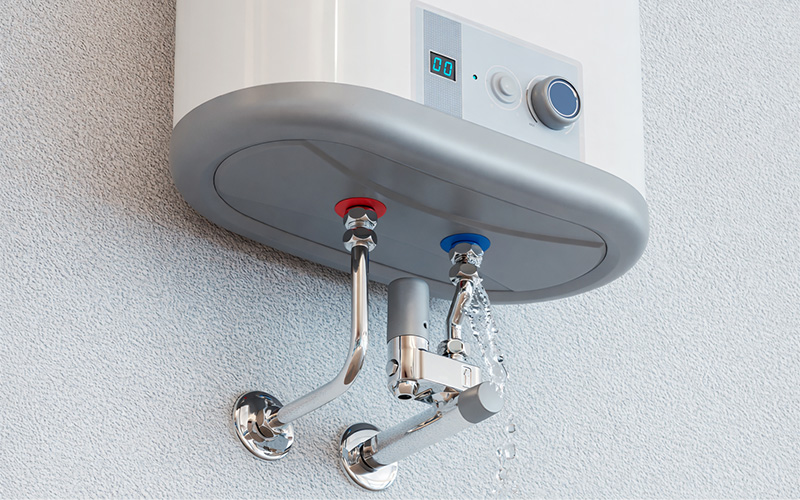
Leaks that appear at the top of a water heater are often easier to identify and address compared to leaks in other areas. The upper section typically contains external connections and fittings, where water enters and exits the system. After prolonged use, these components are exposed to pressure changes, temperature fluctuations, and general wear. All of these can affect how securely they hold water.
Loose inlet or outlet connections are a common cause of leaks at the top of a water heater. Over time, fittings that connect hot and cold water pipes may loosen due to pressure changes or general wear. This causes water to escape gradually, even through small gaps.
Similarly, inlet or outlet valves can degrade with age, leading to slow leaks at connection points that may appear intermittent at first before becoming more noticeable. Issues with the temperature and pressure (T&P) relief valve can also contribute to leaks in this area. When positioned near the top, the valve may release water due to excess pressure or wear, which is part of its safety function rather than a defect.
In older units, anode rod deterioration can also lead to leakage. Corrosion around the rod weakens the seal, allowing water to seep from the top section over time. In systems fitted with an expansion tank, faults in the tank or its connecting fittings may also cause water to appear at the top of the heater.
What This Means:
Top leaks are often repairable and may only require tightening connections or replacing worn components. Early intervention helps prevent the issue from spreading to other parts of the system.
2. Leaks from the Side
Side leaks are typically associated with safety-related components and should not be ignored. In most cases, they originate from the T&P relief valve that releases water when internal pressure or temperature exceeds safe limits.
These leaks are often the result of excessive pressure building up within the tank or water temperatures rising beyond safe operating levels. When this occurs, the system relies on the T&P relief valve to release water and reduce internal stress. This discharge is a protective response, but frequent or continuous leakage suggests that the system is regularly operating outside its normal range.
In other cases, the issue may lie with the relief valve itself. After extended usage, the valve can wear out, become miscalibrated, or fail to seal properly after releasing pressure. When this happens, it may continue to leak even when pressure levels have stabilised, indicating that the component may need inspection or replacement.
What This Means:
A side leak often signals that the system is under stress. The issue may not be resolved by replacing a single part without addressing the underlying cause. Proper inspection is necessary to determine whether pressure levels or heating elements are contributing to the problem.
3. Leaks from the Bottom
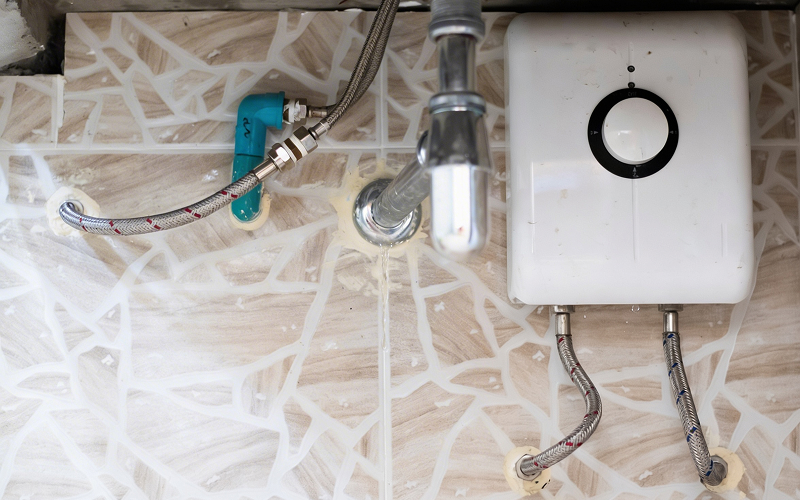
Leaks from the bottom of a water heater are usually the most serious, as they often point to internal damage within the tank itself. Unlike leaks from external components, these issues tend to worsen over time and are harder to resolve through simple repairs.
Internal corrosion due to sediment buildup is a common cause of water leaking from the bottom of a water heater. Minerals in Singapore’s water supply can settle at the base of the tank over time, forming a layer that traps heat and accelerates wear on the inner lining. As this process continues, the protective layer begins to break down and cause corrosion to develop beneath the surface.
Once corrosion reaches the metal structure of the tank, deterioration becomes more severe. Small leaks may appear at first but tend to worsen quickly as the integrity of the tank weakens. In some cases, the issue may be related to the drain valve. If the valve is partially open or worn, it can allow water to leak from the bottom of the unit. While this is generally less serious than internal tank failure, it should still be inspected and addressed to prevent further issues.
What This Means:
If the leak comes from the tank itself, repairs are rarely effective. In most cases, replacing the unit is the safer option, especially if it has reached the end of its lifespan. This is when homeowners may need to consider new water heater installation.
What To Do When You Notice Water Leaking From the Water Heater
Noticing water around your heater can be concerning, but how you respond in the early stages may make a difference. Understanding what steps to take immediately helps limit further damage and ensures the issue is handled safely.
Start by identifying the source of the leak. Check whether the water is coming directly from the heater or from nearby pipes or fixtures. Once confirmed, turn off the water supply by shutting the inlet valve to prevent additional water from entering the tank.
Next, switch off the power or gas supply to reduce the risk of electrical hazards or further system damage. It is also helpful to document the issue by taking photos, as this can assist professionals in diagnosing the problem more efficiently.
If the source is unclear, it is advisable to engage reliable plumbing services in SG to assess the situation safely and accurately. Regular maintenance also helps reduce the risk of major failures and extends the lifespan of your water heater.
Key Practices:
- Test the T&P relief valve periodically to ensure it functions correctly
- Flush the tank annually to reduce sediment buildup
- Inspect connections and valves for early signs of wear
- Monitor for unusual changes such as overheating or inconsistent water output
Preventive care helps detect small issues before they develop into larger problems that require costly repairs.
Professional Support from QB Plumbing
A leaking water heater should never be ignored, but not all leaks indicate the same level of urgency. When the source of a leak is unclear or involves internal components, professional support helps ensure the issue is handled safely and correctly. As a dependable plumbing company in Singapore, QB Plumbing provides services for both residential and commercial properties, supported by a PUB-licensed team.
With experience in diagnosing water heater issues, we focus on identifying the root cause rather than applying temporary fixes. From replacing a faulty valve to carrying out a full system replacement, each solution is guided by the condition of the unit and the safety of the household.
Noticing persistent water leaking from your water heater? Contact us for assistance.