Key Takeaways:
- A toilet leak from the base can mean water is escaping where the toilet meets the floor.
- Water returning after flushing may indicate a failed seal, wax ring, or flange.
- Common warning signs include pooling water, musty smells, damp flooring, and a toilet wobbling.
- Early checks can help prevent hidden dampness, odour, and damage to flooring.
Introduction
Water around the base of the toilet should not be ignored, especially if it appears after flushing or keeps returning after you wipe it away. A toilet leak from the base area often points to a failed seal, loose mounting bolts, an unstable toilet bowl, or damage around the toilet flange.
In Singapore homes, this can be especially concerning in HDB flats, condos, and older bathrooms. Repeated leakage may damage floor finishes, waterproofing layers, or even the unit below if left unresolved. Spotting the signs early helps homeowners decide whether simple checks or professional toilet repair services in Singapore are needed.
What Does a Toilet Leak From the Base Mean?
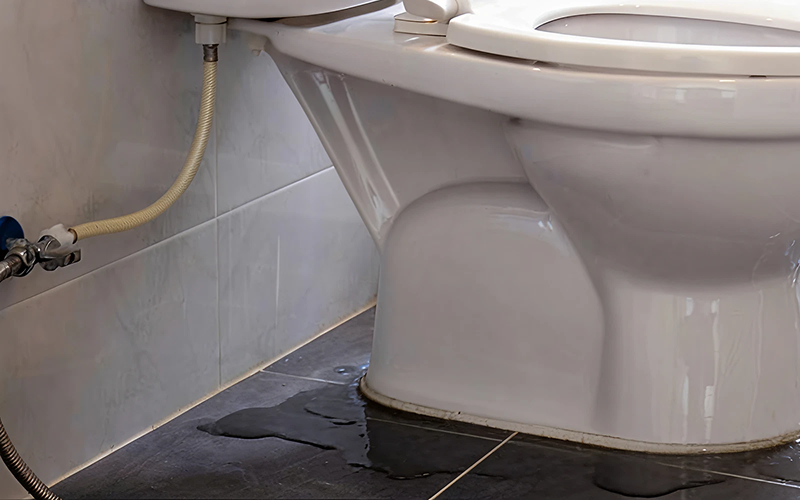
The leak may indicate that water is escaping from the area where the toilet bowl meets the floor. This usually happens when the seal between the toilet and the drain opening is no longer working properly. If water keeps returning after the floor has dried, the toilet should be checked to prevent hidden dampness, odour, or damage to the flooring.
What are the Common Signs of a Toilet Leak From the Base?
A leak around the toilet base is not always obvious at first. Some leaks only appear after flushing, while others may leave behind dampness, odour, or floor damage over time.
1. Water Pooling Around the Toilet
A clear sign is water collecting at the base of the toilet. If you dry the area and water returns after flushing, the leak may be coming from the seal beneath the toilet. This is different from the general bathroom wetness caused by showering or washing the floor. When water appears specifically around the toilet base after flushing, the base seal, wax ring, or flange area should be checked.
2. Musty Smell Around the Toilet
A persistent damp or musty smell may suggest that water is trapped under the toilet base or flooring. If wastewater is involved, the smell may be stronger and should be checked promptly. Odours can also point to a failed seal, as the seal is meant to prevent wastewater and odours from escaping between the toilet and the drain outlet.
3. Soft or Damp Flooring
If the floor around the toilet feels soft, swollen, or constantly damp, water may have been leaking for some time. This can affect tiles, grout, waterproofing layers, or flooring beneath the toilet. Hidden dampness should be taken seriously because water can spread beneath the surface before visible damage appears.
4. Toilet Movement or Wobbling
A toilet should sit firmly on the floor. If it shifts when used, the movement can weaken the seal between the toilet and the drain outlet. In the long run, this may allow water to escape from the base during flushing. A wobbling toilet can also make the leak worse if the underlying cause is not repaired properly.
What are the Main Causes?
There are several reasons why water may appear around the toilet base. Some causes are minor at first, while others require professional intervention to prevent recurrence.
1. Failed Wax Ring or Seal
The wax ring or toilet seal sits between the toilet base and the drain opening. Its purpose is to stop wastewater and odours from escaping. The seal may gradually compress, shift, wear out, or break due to toilet movement. When this happens, water may leak from the base during flushing.
Replacing the seal usually requires removing the toilet, cleaning the old seal, and properly installing a new one. If the toilet is not seated correctly after replacement, the leak may return.
2. Loose or Damaged Flange Bolts
Flange bolts secure the toilet to the floor. If they loosen over time, the toilet may rock slightly. This movement is likely to break the seal underneath and cause leakage at the base.
The bolts can sometimes be tightened carefully. However, overtightening can crack the porcelain, which may lead to a more costly repair. If the bolts are rusted, damaged, or no longer holding properly, replacement may be needed.
3. Damaged Toilet Flange
The toilet flange connects the toilet to the drainage pipe and helps hold the toilet in place. Once the flange is cracked, corroded, uneven, or sitting at the wrong height, the toilet sealing may fail.
A damaged flange can cause repeated leakage even after a new seal is installed. If this happens, engaging a licensed SG plumber can help ensure effective repair to prevent the leak from returning.
4. Cracked Toilet Base
Although less common, a crack in the toilet base can allow water to escape. Small cracks may be difficult to spot at first, especially if they are near the floor or hidden by the toilet shape.
If the base is cracked, sealing the surface may only stop the leak temporarily. Cracks can widen with regular use, allowing water to escape again and compromising the toilet’s stability. In many cases, replacing the toilet bowl is safer and more reliable than repeated patching.
5. Poor Installation or Uneven Flooring
An uneven installation can leave small gaps between the toilet base and the floor. As the toilet moves during use, the seal beneath may loosen, allowing water to escape around the base after flushing.
In some cases, toilet shims may be used to stabilise the base. However, the seal and flange should still be checked to ensure there is no hidden leakage beneath the toilet.
How to Confirm the Leak Is From the Toilet Base
Before arranging repairs, it helps to confirm whether the water is actually coming from the toilet base. For instance, checking the water inlet valve, hose, and cistern area can help rule out nearby leak sources. If the base only becomes wet after flushing, the seal or flange is more likely the issue.
1. Dry the Area First
Start by wiping the floor and toilet base completely dry. This makes it easier to see where the water is coming from. If the area becomes wet again without any shower use, mopping, or floor washing, the toilet should be checked more closely.
2. Check After Flushing
Flush the toilet and watch the base closely. If water appears only after flushing, the issue is likely linked to the base seal, wax ring, or flange area. A toilet leak from base areas is often most noticeable during or shortly after flushing because that is when wastewater passes through the outlet connection.
3. Use Tissue or Paper Towels
Place dry tissue or paper towels around the base of the toilet. If they become wet after flushing, this can help confirm that water is escaping from the base area. This method can also help you identify which side of the base is leaking more clearly.
4. Rule Out Condensation
In humid bathrooms, condensation can sometimes form on the toilet bowl and drip onto the floor. However, condensation usually appears on the outside surface of the toilet rather than only after flushing. If water appears consistently after flushing, a base leak is more likely.
Why Toilet Base Leaks Should Be Fixed Quickly
Toilet base leaks are easy to underestimate because the water may appear in small amounts. However, if the leak occurs each time the toilet is flushed, moisture can build up beneath the base, leading to hidden damage.
1. Water Damage to Flooring
A small leak can slowly affect the surrounding floor. As moisture accumulates, it may gradually weaken grout, loosen tiles, damage waterproofing layers, or cause damp patches. In bathrooms with older flooring, the damage tends to spread before the surface shows obvious signs.
2. Hygiene Concerns
If the leak involves toilet outlet wastewater, it can pose hygiene risks because the water may contain bacteria, waste residue, and unpleasant odours. This is different from clean water leaking from a supply pipe. When water escapes from the base after flushing, the area should be cleaned and repaired promptly to prevent contamination around the bathroom floor.
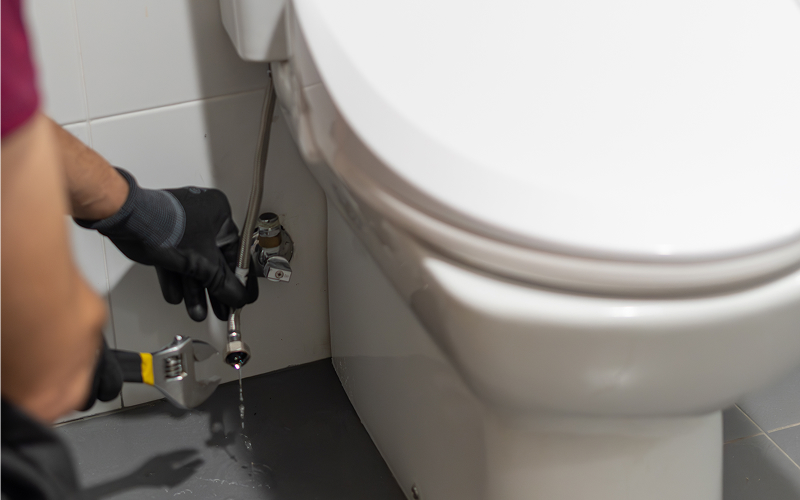
3. Odour and Mould Growth
Moisture trapped under the toilet base can lead to unpleasant smells and mould growth. Once water seeps beneath the flooring, the issue may become harder and more expensive to repair. Prompt repair helps prevent hidden dampness from spreading and reduces the risk of recurring odour or mould problems.
4. Recurring Toilet Instability
A leaking base and a rocking toilet often worsen each other. Movement weakens the seal, and a failed seal may make the toilet less secure. Fixing only one part of the problem may not solve the issue fully. It is advisable to check the seal, bolts, flange, and floor level together.
Can You Fix the Leak Yourself?
Some homeowners may try tightening the base bolts first. This may help if the issue is caused by slightly loose bolts, but it must be done gently. Tightening too much can crack the toilet base.
If the leak continues, the wax ring or seal may need to be replaced. This involves turning off the water supply, draining the toilet, removing the toilet bowl, cleaning the old seal, installing a new seal, and securing the toilet back in place.
While this may sound simple, it can be difficult if the toilet is heavy, the flange is damaged, or the floor condition is unclear. If the leak keeps returning, professional plumbing work is usually the safer option.
When to Engage a Professional
A toilet leak from the base should be assessed by a professional if it keeps returning after basic checks. This is especially important when:
- Water keeps appearing at the toilet base
- The toilet rocks
- There is a bad smell
- The floor feels soft
- The leak returns after tightening the bolts
- The flange is damaged
- The toilet base is cracked
QB Plumbing provides professional plumbing services, including toilet leak repair, toilet bowl replacement, drainage work, leak detection, and plumbing maintenance. For toilet base leaks, our PUB-licensed team does not only look at the visible water around the bowl. We also check the base seal, flange, mounting bolts, cistern area, water supply connection, and surrounding floor condition to identify where the leak is actually coming from.
This inspection process helps prevent incomplete repairs, such as replacing only the seal while missing a damaged flange, an unstable toilet bowl, a loose bolt, or a separate water supply leak. After confirming the actual cause, we implement the appropriate fix, reinstall the toilet as needed, and reduce the risk of recurring leakage after the work is completed.
Contact us to arrange a professional inspection.