Key Takeaways:
- Not all water heater leaks mean the tank has failed. Many issues come from valves, joints, or fittings that can be fixed easily.
- Always identify the source of the leak first before deciding on repair or replacement.
- Switch off the power supply immediately to reduce the risk of electrical hazards.
- Shut off the water supply to minimise further leakage and prevent damage.
- Simple issues such as loose valves or pipe connections can often be resolved quickly.
- Leaks from the tank itself usually indicate internal damage and may require replacement.
- Older units with recurring issues are often more cost-effective to replace than repair.
Introduction
A leaking water heater can be a worrying issue for any homeowner. In many Singapore homes, water heaters are used daily and are often installed in compact bathroom spaces, so even a small leak can quickly become disruptive. In many cases, the issue may stem from minor components such as valves or pipe connections that can be resolved with a simple check.
Understanding where the leak is coming from is the first step in avoiding unnecessary costs and preventing further damage. This guide explains how to identify common leak sources and what actions to take immediately for safety.
What to Do When a Water Heater Leaks
1. Start by Identifying the Source of the Leak
Before assuming the worst, carry out a basic visual inspection if the unit is accessible. A leaking heater does not always indicate a failed tank. It may be caused by smaller external components.
-
Relief Valve and Discharge Tube
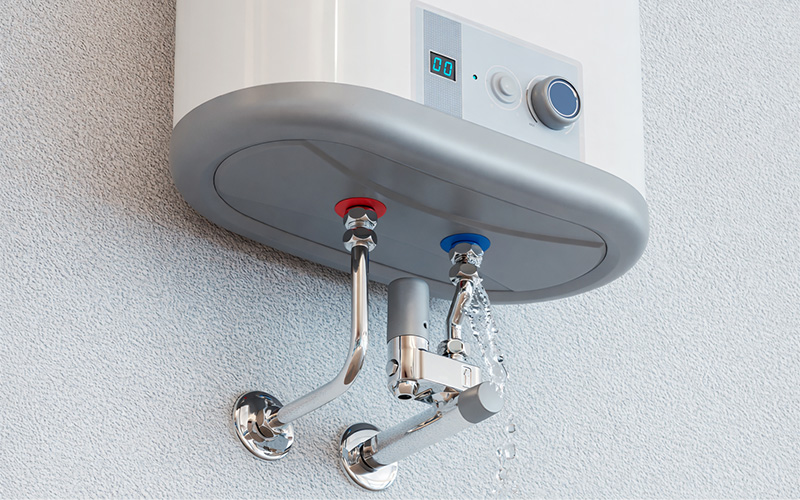
The pressure relief valve is a safety feature designed to release excess pressure from the heater. Occasional dripping is normal, especially when the system is under strain. However, if you notice water pooling near the discharge tube, the issue may simply be a loose or disconnected pipe. Reattaching or securing it properly can sometimes resolve the problem without further intervention.
-
Water Inlet and Outlet Pipes
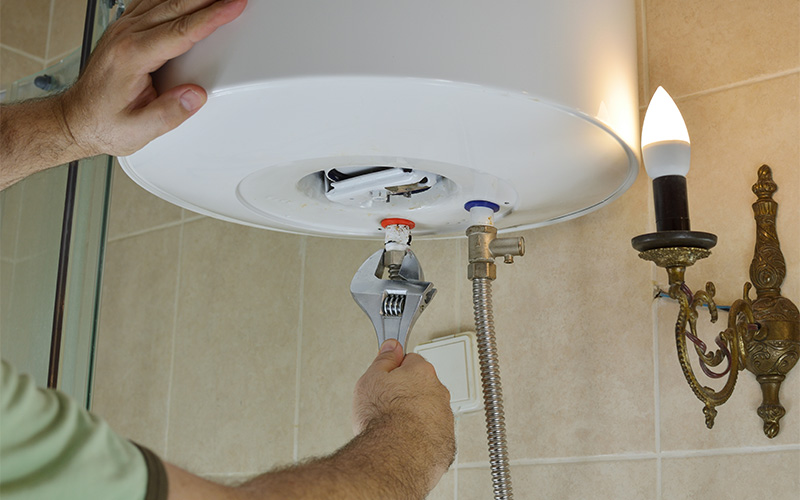
Leaks frequently occur at pipe joints, particularly in newly installed systems. These are often installation-related rather than a sign of equipment failure. If the connections appear loose or poorly sealed, tightening the fittings may stop the leak. In such cases, a straightforward repair process is usually sufficient and avoids the need for replacing the entire unit.
-
Drain Valve for Floor-Standing Units
For storage heaters placed on the floor, the drain valve is another common source of leaks. After servicing or flushing, the valve may not be fully secured. A slight adjustment or tightening can prevent water from seeping out. This is one of the simplest issues to fix and does not typically require extensive residential plumbing repair work.
-
Heater Tank Condition
If water appears to be leaking directly from the tank body, the situation is more serious. Signs such as rust-coloured water, visible corrosion, or continuous dripping from the tank surface usually indicate internal deterioration. In these cases, repairs are unlikely to provide a long-term solution. A compromised tank will continue to leak and may eventually fail.
2. Prioritise Safety Before Taking Any Action
Once you confirm that the leak is coming from the heater or surrounding components, safety should be your first concern. As water heaters combine electricity and water in a confined space, the risk of electrical hazards may increase if not handled carefully.
The first step is to switch off the heater’s power supply, typically from the main switch outside the bathroom or at the electrical distribution board. This prevents electrical current from flowing through the unit while water is present, reducing the risk of shock.
Next, avoid touching any exposed wiring, switches, or heater components if the area is wet. Even small amounts of water can create unsafe conditions, especially in enclosed bathroom environments where moisture builds up quickly.
3. Stop the Water Flow to Minimise Damage
After addressing the power supply, the next step is to control the water source. This helps limit further leakage and prevents damage to surrounding fixtures, flooring, or ceilings. This is a key concern in multi-storey homes, as leaks may extend to units below.
Locate the stop valve connected to the cold water inlet of the heater. In most homes, the valve sits near the heater unit or inside the bathroom. Turn the valve clockwise to shut off the incoming water supply. Once closed, water will no longer flow into the heater, and the leak should reduce or stop.
If the leak continues briefly after the valve is shut off, residual water may still be present in the tank or pipes. Allow some time for this water to drain. Placing a container or towel beneath the leak can help manage any remaining water and keep the area dry.
4. Know When Repair Is Not Enough
While many cases of water heater leaking can be resolved with minor adjustments, there are situations where repair is no longer a viable option. When the issue stems from internal damage or long-term wear, temporary fixes may only provide short-lived results. They could even lead to recurring leaks or further complications over time.
Replacement is usually required when the internal tank is leaking or when there is visible corrosion affecting the unit’s structural integrity. After prolonged use, sediment build-up and wear can weaken the tank, making it prone to cracks and leaks.
Another factor to consider is the age of the heater. Units that have been in use for several years may experience declining performance, even if the leak appears minor. In such cases, repeated repairs can become less cost-effective than replacing the unit entirely.
When to Seek Professional Help
There are situations where a professional assessment is necessary to ensure both safety and accuracy. When the leak persists despite basic checks or when multiple components appear to be affected, a detailed diagnosis conducted by an experienced HDB licensed plumber is key to avoiding unnecessary repairs or replacements.
If the heater is installed above a false ceiling, leaks may not be immediately visible and can spread over time, causing damage before they are detected. Meanwhile, if the source of the leak is unclear or there are concerns about electrical safety, it is advisable to engage professional help.
Why Proper Diagnosis Matters
A common mistake homeowners make is assuming that any leak requires a full replacement. In reality, many issues can be resolved through targeted plumbing fixes.
Misdiagnosing the problem can lead to higher costs and unnecessary disruption. For example, replacing a heater when the issue lies in a loose valve or connection does not address the root cause.
A proper inspection focuses on identifying the exact source of the leak and determining whether the issue is isolated or part of a larger problem. This approach ensures that repairs are both effective and cost-efficient.
Reliable Support for Water Heater Issues in Singapore
A leaking water heater does not always mean immediate replacement. In many cases, the issue can be traced to minor components such as valves, pipe connections, or fittings that can be resolved with simple adjustments.
The key is to identify the source of the leak early, prioritise safety by switching off power, and control the water flow to minimise damage. Understanding when repair is sufficient and when replacement is necessary helps homeowners make informed decisions.
When in doubt, engaging a qualified professional ensures that the issue is handled correctly and in line with Singapore’s safety standards. QB Plumbing provides dependable support across Singapore. As a PUB-licensed plumbing company, we handle a wide range of issues, from minor leaks to more complex system faults.
With experience in plumbing repair, we focus on accurate diagnosis and practical solutions. Our team uses advanced tools to assess problems thoroughly, helping to reduce unnecessary replacements while ensuring repairs are carried out properly.
Contact us for prompt professional assistance, so your system can be restored safely.