Key Takeaways:
- If you are asking what plumbing you need for a dishwasher, start by checking whether your kitchen has a suitable water supply and drainage connections.
- Many HDB flats and condominiums may not have ready dishwasher connections.
- A dishwasher requires a reliable water supply, proper drainage, and sufficient space for safe installation.
- Existing kitchen plumbing may need adjustments before the appliance can be installed.
- Careful planning helps reduce the risk of leaks, poor drainage, and awkward pipe routing
Introduction
Dishwashers are becoming more common in Singapore homes, especially among homeowners who want to make daily kitchen clean-up easier. After a long workday or a busy family meal, having an appliance that handles washing up can be a real convenience.
However, unlike other common kitchen appliances, dishwashers are not always part of the original kitchen setup in HDB flats or condominiums. Many homeowners may wonder what plumbing they need for a dishwasher and whether their current kitchen setup can support it.
Knowing the basic water supply, drainage, and space requirements early can help you plan the right placement. It also reduces the risk of leaks, poor drainage, or installation difficulties later.
Why Dishwasher Installation Often Requires Plumbing Modifications
Most Singapore kitchens are set up with basic fixtures such as a sink and a tap. When adding a dishwasher, homeowners often need to check what plumbing is needed before deciding where to install it.
Adding a dishwasher often requires some level of modification to the existing plumbing system. The appliance needs to draw clean water during its wash cycle and discharge used water safely after each cycle. If your current kitchen setup does not already have suitable connections, a plumber may need to adjust the pipework under the sink or nearby cabinet area.
These changes should be planned carefully. A poorly fitted water inlet may lead to leaks over time. An unsuitable drainage connection may cause slow discharge or water to back up. Pipe routing also matters because tight spaces or awkward bends can place strain on the connections.
Proper planning helps the dishwasher fit into your kitchen more smoothly. It also ensures the appliance operates safely without interfering with your sink, cabinets, or other kitchen fixtures.
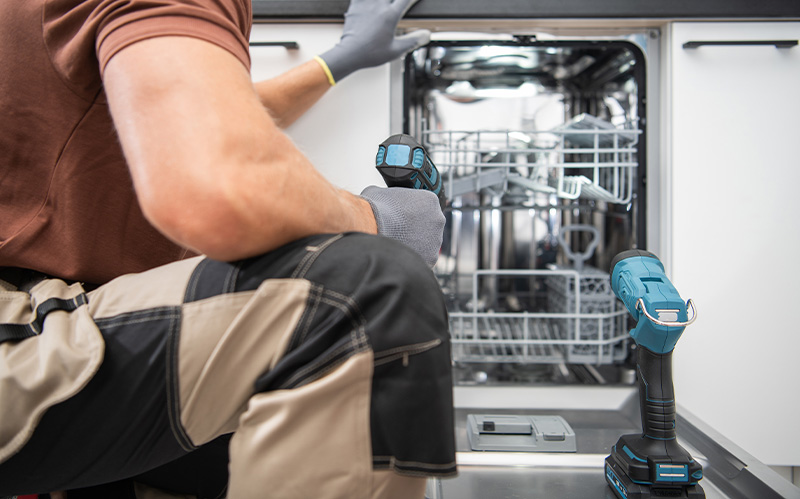
Essential Plumbing for Dishwasher Installation
A dishwasher needs more than just space in the kitchen. It must be connected to the right plumbing points so that water can enter and exit the appliance safely. For most homes, the key requirements include a reliable water supply, proper drainage, and suitable pipe routing within the kitchen layout.
These requirements may seem straightforward, but every kitchen setup is different. Proper plumbing work not only ensures the dishwasher is connected correctly on the first day but also keeps it secure and reliable during regular use.
1. Connecting to a Reliable Water Supply
One of the first requirements for dishwasher installation is a stable water supply. The dishwasher needs an inlet connection that allows it to draw water during each wash cycle. This connection must be secure, properly fitted, and suitable for repeated use.
In many homes, the water supply may be taken from the existing line under the kitchen sink. Depending on the layout, this may involve extending the pipe or splitting the existing water line so that both the sink and dishwasher can function properly. The connection should be done with appropriate fittings to reduce the risk of leakage.
Water pressure also matters. If the supply is unstable or the fitting is unsuitable, the dishwasher may not fill properly or operate less efficiently. At the same time, connections that are too loosely fitted can create small leaks that may only become noticeable after repeated cycles.
2. Ensuring Proper Drainage for Wastewater
A dishwasher also needs a proper drainage connection to remove used water after each cycle. In most Singapore homes, this drainage line is connected to the sink’s waste pipe. However, the existing drainage setup must be suitable for the additional appliance.
If the drainage connection is misaligned, wastewater may not flow smoothly. This can lead to slow drainage, unpleasant smells, or water backing up into the appliance. Over time, food residue and grease may also contribute to blockages if the connection is not set up properly.
A suitable drainage setup should allow wastewater to discharge efficiently without affecting the sink. The pipe should be positioned correctly and secured well to prevent leaks. If your current under-sink drainage layout is too tight or not designed for an extra connection, adjustments may be required.
This is one reason homeowners should avoid treating dishwasher installation as a simple hose connection. Proper drainage plays a major role in how well the appliance performs and how clean the kitchen remains after each use.
3. Allocating Space and Pipe Routing Within the Kitchen
Space planning is another important part of dishwasher installation. Even if there is enough room for the appliance itself, the plumbing connections must also be accessible. The dishwasher needs space for the water inlet hose, drainage hose, and any pipe adjustments required behind or beside the unit.
This can be challenging in compact kitchens. Cabinet space and pipe positions should be checked before installation. This helps ensure the dishwasher has enough clearance and can connect to the sink area without long or strained pipe runs.
Additionally, good pipe routing helps prevent unnecessary pressure on hoses and fittings. If the dishwasher needs servicing or replacement later, accessible connections can make the process more straightforward.
Homeowners should also consider how the dishwasher door opens and whether nearby cabinets, drawers, or walkways will be affected. Plumbing and layout should work together so the appliance fits neatly into the kitchen without creating daily inconvenience.
Professional Installation with QB Plumbing
Installing a dishwasher involves more than placing the appliance and connecting a few hoses. If you are wondering what plumbing you need for a dishwasher, start by looking at your existing kitchen plumbing. The appliance must be safely connected to both the water supply and the drainage system.
Working with a trusted plumbing company in Singapore can make the installation process clearer and more reliable. QB Plumbing provides practical support for homeowners planning to install a dishwasher, from assessing the kitchen layout to preparing the necessary connections.
As a professional plumbing contractor in Singapore, we also consider practical details such as space, accessibility, and long-term maintenance to ensure a proper installation process. With the right plumbing setup, you can enjoy your appliance’s convenience while reducing the risk of leaks, drainage problems, or future repair issues.
Contact us to find out what plumbing you need for a dishwasher and how we can help with a safe, practical installation.