Key Takeaways:
- Water hammer is caused by sudden changes in water flow that create pressure shocks in pipes.
- Common triggers include rapid valve closure and appliances such as washing machines or dishwashers.
- Warning signs include pipe vibration, pressure fluctuations, minor leaks, and noises when turning off taps.
- Trapped air, loose pipes, and faulty valves can worsen pressure fluctuations and noise.
- Early identification helps prevent long-term damage, such as leaks or pipe stress.
Introduction
Water hammer, also known as hydraulic shock, is a common plumbing issue homeowners often experience. Typically presenting as loud banging or knocking sounds in the pipes, hydraulic shock is actually a sign of sudden pressure changes within the plumbing system.
If left unaddressed, the issue can lead to long-term damage, such as leaks, weakened joints, or even pipe failure. Understanding the cause and knowing how to manage it helps protect your home plumbing system and reduce repair costs over time.
What Causes Water Hammer
This issue is mainly triggered by sudden changes in water flow within the plumbing system. These changes create pressure waves that move through the pipes, causing the banging sound homeowners often hear.
1. Sudden Valve Closure
When taps or valves close quickly, water is forced to stop almost instantly. This creates a pressure surge that travels through the pipe system and produces a knocking noise.
2. Fast-Acting Appliances
Appliances such as washing machines and dishwashers shut off water rapidly during cycles. These quick closures are a common source of pressure spikes in household systems.
3. Trapped Air in Pipes
Air pockets inside pipes can disrupt steady water flow. When these pockets shift suddenly, they create shockwaves that contribute to water hammer sounds.
4. Loose or Poorly Secured Pipes
Pipes that are not properly fixed can move when pressure changes occur. This movement makes the noise more noticeable and can increase strain on fittings.
5. Worn or Faulty Valves
Valves that are damaged or not functioning properly may fail to regulate water flow smoothly. This increases pressure fluctuations within the system.
Hydraulic shock is not always identified by loud banging noises alone. In many cases, there are other subtle warning signs within the plumbing system that indicate pressure instability. Some may even signify the need for plumbing maintenance.
Several signs homeowners should watch for:
- Vibrating or shaking pipes
- Sudden changes in water pressure
- Minor leaks around pipe joints
- Noise when taps or appliances are switched off
Why You Should Fix the Issue Early
Each pressure shock repeatedly stresses pipes, joints, and connected appliances, which can weaken the system over time. Ignoring the problem can lead to gradual but serious damage within the plumbing system.
If left unaddressed, the issue may result in:
- Pipe cracks or bursts due to repeated pressure impact
- Leaks forming at weakened joints
- Damage to valves and household appliances
- Water damage to surrounding areas if leaks worsen
Addressing the issue early helps maintain system stability and reduces the risk of costly repairs later.
How to Fix Water Hammer
Depending on the cause, homeowners can use several practical methods to reduce or eliminate water hammer in the plumbing system. The right solution often depends on whether the issue is caused by pressure changes, loose fittings, trapped air, or faulty components. Understanding these fixes helps address the problem effectively and prevent it from recurring.
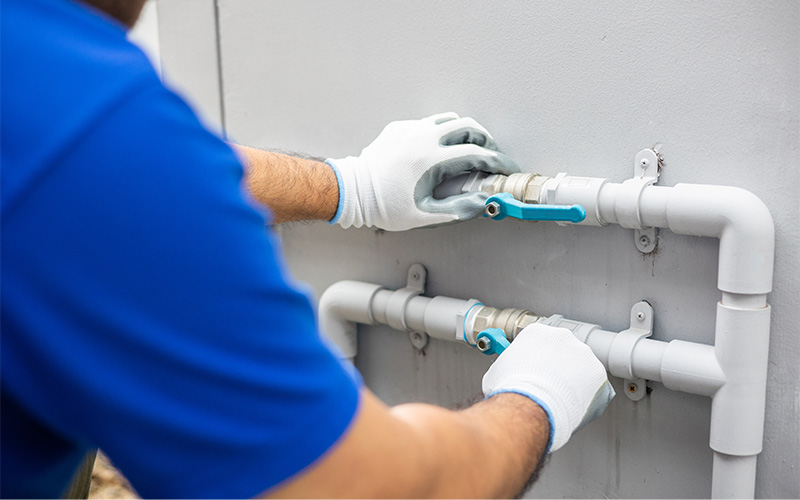
1. Secure Loose Pipes
Loose pipes can amplify vibration and noise. Securing them with proper brackets helps stabilise the system and reduce movement during pressure changes.
2. Drain and Restore Air Chambers
Air chambers act as cushions that absorb sudden pressure surges. To restore them, turn off the main water supply, open taps to drain the system, then switch the water back on to refill the chambers with air.
3. Install Water Hammer Arrestors
Water hammer arrestors are devices designed to absorb the shock caused by sudden water stoppage. They are typically installed near appliances or fixtures that trigger pressure spikes and provide a long-term solution.
4. Release Trapped Air
Trapped air within the plumbing system can contribute to pressure instability and worsen water hammering over time. Installing air-release valves at key points in the system helps allow excess air to escape, preventing it from forming pockets that disrupt steady water flow. This improves overall flow consistency and helps reduce sudden pressure buildup that can lead to noise and pipe shock.
5. Check and Replace Faulty Valves
Worn or faulty valves should be inspected regularly and replaced when necessary to ensure the system continues to function properly. Doing so helps restore smooth flow control within the plumbing system and reduces sudden pressure changes that can contribute to water hammering.
When to Call a Professional Plumber
While some minor plumbing issues can be addressed through basic home checks, certain situations require professional attention to ensure the problem is properly diagnosed and safely resolved. Engaging an experienced plumber helps prevent further damage and ensures the plumbing system continues to function efficiently over time.
Professional support is recommended when the issue persists despite basic troubleshooting steps, as this may indicate a deeper problem within the plumbing system. It is also important to engage a professional if there are visible leaks, unusual pipe movement, or signs of structural stress, as these can worsen over time if left unchecked. Older or more complex plumbing systems may require specialised assessment, especially when installing devices or making system modifications, to ensure a proper and safe resolution.
In such cases, finding a reliable plumber near you ensures timely service and proper diagnosis.
Plumbing Support From QB Plumbing
Water hammer is more than just a noise issue. It is a sign of pressure imbalance within your plumbing system that should not be ignored. With the right fixes and timely maintenance, homeowners can protect their pipes, appliances, and overall water system health.
For persistent water hammer issues, QB Plumbing provides professional plumbing services across Singapore. As a PUB-licensed plumber in Singapore, our team is trained to identify the root cause of pressure-related issues and deliver practical, long-lasting solutions.
We support homeowners with accurate diagnostics and structured plumbing repairs, ensuring that issues are not just temporarily fixed but properly resolved. From inspections to system repairs and upgrades, our approach focuses on restoring stable water flow and preventing recurring problems.
Contact us to arrange professional assistance.